
Gasoline doesn’t last forever. Many people make the mistake of leaving gasoline in their generator for months—or even years—at a time.
Learning how to properly drain gas from your generator is the single best thing you can do to keep it running reliably for years. This guide will walk you through the entire process, step-by-step, using plain language.
Why Draining Gas From Your Generator is So Important
The shelf life of gasoline is likely much shorter than you think. Most modern gasoline is blended with ethanol, which begins to degrade in as little as 30 to 60 days.
The Problem with “Stale” Gas
As gasoline sits, the lighter chemicals in the fuel evaporate, leaving behind a thick, tacky substance often described as “varnish” or “gum.” This sticky residue can clog the tiny passages in your generator’s carburetor. If the carburetor is gummed up, the engine won’t get the fuel it needs to start, or it will run very poorly (surging and stalling).
Ethanol and Moisture
Ethanol is “hygroscopic,” which is a fancy way of saying it attracts water. If your generator is stored in a humid garage or shed, the ethanol in the gas will pull moisture from the air. This water eventually settles at the bottom of the fuel tank, leading to corrosion and rust inside the fuel system. This can ruin the tank and fuel lines, leading to expensive repairs.
When to Drain Gas from Your Generator
Knowing when to drain the fuel is half the battle. You don’t necessarily need to drain it after every single use, but you should follow these general rules:
- Long-Term Storage: If you don’t plan on using your generator for more than 30 days, you should drain the tank and the carburetor.
- End of the Season: If you live in an area with seasonal storms (like hurricane or blizzard seasons), drain the unit once the high-risk season ends.
- Before Moving or Transporting: If you are moving houses or taking the generator on a camping trip in the back of a truck, draining it prevents messy leaks and reduces fire risks.
- If You Didn’t Use a Stabilizer: If you forgot to add a fuel stabilizer to your fresh gas, you need to be much more aggressive about draining it quickly.
Step-by-Step: How to Drain the Gas
Draining a generator isn’t a complicated mechanical task, but it does require care because you are dealing with a highly flammable liquid.
1. Safety First
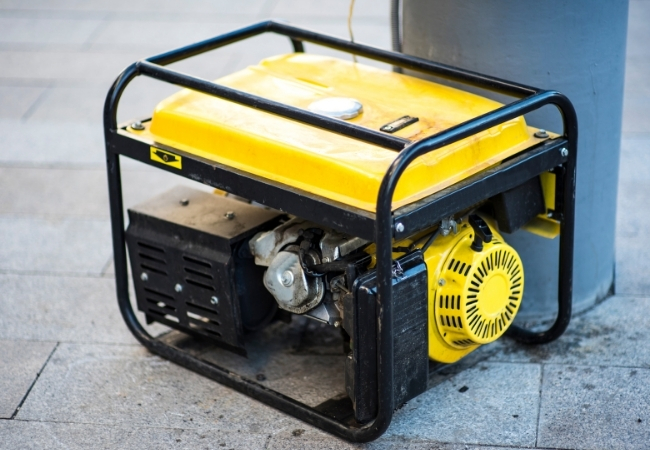
- Location: Always work outdoors in a well-ventilated area. Never drain gas inside a garage or basement.
- Engine Temp: Ensure the engine is completely cool to the touch. Spilling gas on a hot muffler is a major fire hazard.
- Protective Gear: Wear gloves and safety glasses.
2. Prepare Your Container
Grab a clean, approved gasoline container (usually red plastic). Do not use old milk jugs or glass jars, as gasoline can melt some plastics or break glass.
3. Method A: Using the Drain Bolt (Recommended)
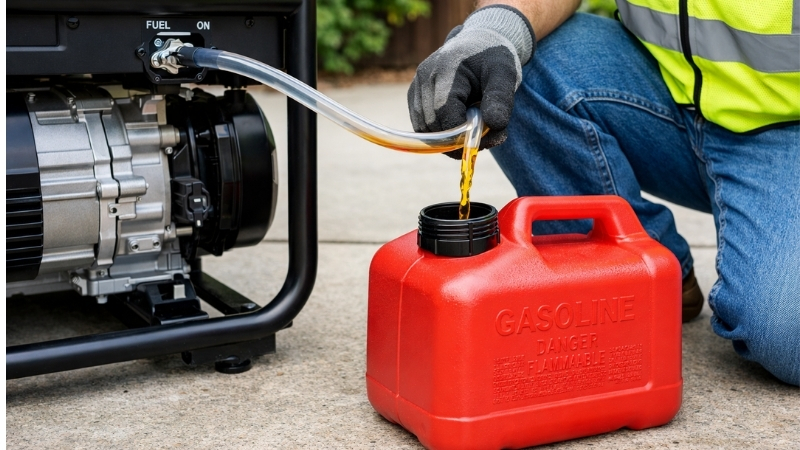
Most modern generators have a drain bolt specifically for this purpose.
- Locate the fuel line leading from the tank to the carburetor.
- Look at the bottom of the carburetor bowl; there is usually a small screw or bolt.
- Place your container underneath the carburetor.
- Open the fuel valve (the “On” position).
- Loosen the drain bolt. The gas will flow out of the tank, through the line, and out of the carburetor into your container.
4. Method B: Siphoning (If no drain bolt is available)
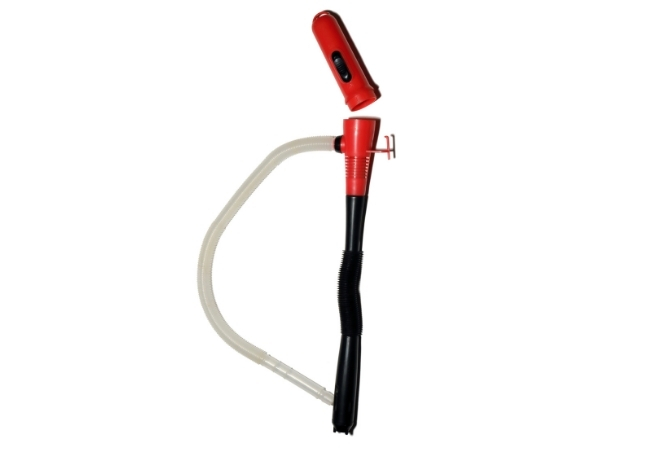
If your generator is an older model or a very small portable unit:
- Use a manual siphon pump (never use your mouth!) to suck the gas out of the main tank into your container.
- Crucial Step: After the tank is empty, you must still run the engine until it dies to clear out the remaining gas inside the carburetor.
5. Clear the Carburetor
Even if you drain the tank, a small amount of gas stays in the carburetor.
- Close the drain bolt.
- Try to start the generator.
- Let it run until it sputters and stops. This ensures the internal components are dry and won’t get “gummed up” while sitting.
What to Do With The Old Gas
Once you have a bucket of old gas, you cannot simply pour it down the drain or into the grass—that is illegal and environmentally dangerous.
- If it’s relatively fresh: If the gas is only a month or two old and looks clear, you can often pour it into your car’s gas tank (as long as your car has a large tank that is at least half-full of fresh gas). The car’s engine is much more robust and can easily handle diluted older fuel.
- If it’s very old/smelly: If the gas looks dark, cloudy, or smells like rotten paint, it is “dead.” You must take it to a local hazardous waste collection center. Many fire departments or local automotive shops can also point you toward a recycling center.
Frequently Asked Questions(FAQs)
Can I just use a fuel stabilizer instead of draining it?
Fuel stabilizers are great for keeping gas fresh for up to 12 months. However, for “best practice” storage (especially over a year), draining is still the safest bet.
What if my generator won’t start because of old gas?
You will likely need to remove the carburetor and clean it with “carb cleaner” spray. In some cases, the residue is so bad that the entire carburetor needs to be replaced.
Does propane or diesel go bad as fast as gasoline?
No. Propane lasts indefinitely, which is why dual-fuel generators are so popular. Diesel lasts longer than gas (about 6–12 months) but can eventually grow algae if not treated.