
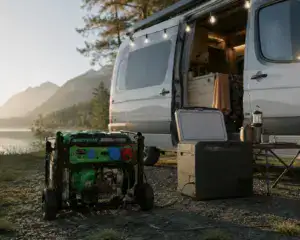
Quick answer: Most gasoline portable generators run 6 to 18 hours on a single tank, depending on tank size and load. Diesel and multi-fuel/dual-fuel models (running on LPG or natural gas) typically run longer and handle sustained loads better. But fuel capacity isn’t the only limit — engine heat, oil condition, and duty-cycle design all cap how long a unit should run before it needs a break, regardless of how much fuel is left.
Below is a full breakdown of what actually determines runtime, how it varies by fuel type and generator size, and why “as long as there’s fuel” isn’t the same as “as long as it’s safe.”
What Determines How Long a Generator Can Run
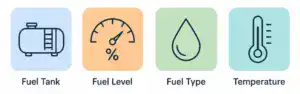
Four factors decide continuous runtime, and they interact with each other:
Fuel tank size. This is the most obvious ceiling. A 1–2 gallon tank on a compact unit will empty far faster than a 6–8 gallon tank on a mid-size model, even at the same load.
Load percentage. Runtime figures are almost always quoted at 50% load for a reason — push a generator toward 75–100% of its rated output and fuel consumption rises sharply, sometimes cutting runtime by a third or more. A generator running light loads (a fridge, some LED lights, a laptop) will stretch noticeably longer than one running power tools or an AC unit.
Fuel type. Different fuels burn at different rates and offer different runtime advantages:
- Gasoline: Burns fastest and is the least energy-dense per gallon among common generator fuels — shortest runtime per tank, but the most widely available fuel.
- Diesel: Engines are typically built for tougher, sustained-load duty cycles and often deliver more runtime per gallon than gasoline.
- LPG / Natural Gas: Removes the “empty tank” problem almost entirely, since supply can be swapped (LPG cylinder) or piped in (NG) rather than manually refilled.
- Multi-Fuel / Dual-Fuel: Runs on gasoline, LPG, and/or NG depending on the model, so runtime isn’t capped by a single fuel source — increasingly common for anyone who needs longer or more flexible runtime.
Engine design and ambient conditions. Inverter generators that vary engine speed to match the load (rather than running at a fixed RPM) use noticeably less fuel under light loads, which extends runtime. High heat and high altitude both reduce efficiency and can shorten runtime on any fuel type.
Runtime by Fuel Type
| Fuel Type | Typical Continuous Runtime | Notes |
|---|---|---|
| Gasoline | 6–12 hours per tank (50% load) | Fastest fuel burn; most common for portable units |
| Diesel | 8–24 hours per tank | Better fuel efficiency, more tolerant of heavy/sustained loads |
| LPG / Propane | Limited mainly by tank/cylinder size | No degradation in storage; easy to swap tanks for extended runs |
| Multi-Fuel / Dual-Fuel | Varies by fuel source in use | Can switch between gasoline, LPG, and/or NG, so runtime isn’t tied to one fuel type |
Multi-fuel and dual-fuel portable units are worth calling out separately: because they can run on gasoline, LPG, or natural gas depending on the model, operators aren’t locked into a single fuel’s runtime ceiling. That flexibility is a big part of why multi-fuel portable generators have become popular for both storm-prep buyers and rental fleets — if one fuel source runs low, the operator can switch rather than stop.
Runtime by Generator Size
As a rough guide for gasoline models at moderate (around 50%) load:
- Small units (1,000–2,000W, 1–2 gallon tank): roughly 5–8 hours
- Mid-size units (2,500–5,000W, 3–4 gallon tank): roughly 8–12 hours
- Larger portable units (5,000W+, 5+ gallon tank): roughly 10–15 hours
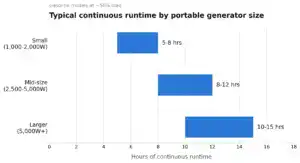
These numbers shift quickly once load climbs above 50%, so any spec sheet runtime should be read as a best-case figure, not a guarantee under real working conditions.
Why You Shouldn’t Run a Generator Non-Stop for Days
Even with an ample fuel supply — say, a multi-fuel unit connected to an LPG tank — continuous operation for days at a time isn’t something portable generators are built for. A few reasons:
Heat and wear. Small engines generate significant heat under sustained load. Without scheduled downtime, that heat accelerates wear on internal components and can shorten the generator’s lifespan considerably.
Oil breakdown. Engine oil degrades faster under continuous heavy use. Manufacturer guidance generally calls for oil changes every 50–100 hours under normal use, but that interval commonly drops to every 25–50 hours for units running continuously or in hot, dusty conditions.
Manufacturer duty-cycle limits. Most portable generators are engineered for intermittent or standby-style use, not the 24/7 continuous duty cycle that industrial or prime-power generators are built for. Running a portable unit like a prime power source will void warranties on many models and increase failure risk.
A common rule of thumb: shut the unit down for 15–30 minutes after each full tank or every 24 hours, whichever comes first, to let it cool and to check oil, fuel lines, and connections before restarting.
How to Extend Continuous Runtime Safely
If a job or outage genuinely calls for longer runtime, there are practical ways to extend it without pushing the generator past its design limits:
- Right-size the load. Running a generator at 50% load rather than near capacity is one of the simplest ways to extend both runtime per tank and engine lifespan.
- Use an auxiliary or larger fuel tank where the manufacturer supports it, to reduce refueling frequency.
- Choose an inverter or eco-throttle model for lighter loads — these adjust engine speed dynamically and burn noticeably less fuel than fixed-speed engines under partial load.
- Consider a multi-fuel or dual-fuel model if extended runtime matters more than sticking to one fuel type — swapping a propane tank or switching to NG is far faster than repeatedly refueling with gasoline, and LPG/NG don’t degrade in storage the way gasoline does.
- Stick to the maintenance schedule. Oil, air filter, and spark plug intervals aren’t just paperwork — skipping them is the most common reason portable generators fail early during exactly the extended-use situations they’re needed for.
Portable Generators:Matching Runtime to the Job
Typical runtime: 6–18 hours per tank (gasoline); longer with diesel or multi-fuel/dual-fuel models running LPG or NG.
Best suited for:
- Job sites and construction where the unit needs to move between locations
- Camping, RVs, and outdoor/off-grid use
- Short-to-medium outage backup at home
- Rental fleets serving multiple customers or sites
- Situations where budget and portability matter more than unattended, multi-day runtime
Pros:
- Lower upfront cost, no installation required
- Can be moved and redeployed as needed
- Multi-fuel/dual-fuel models let you switch fuel sources on site instead of being tied to one supply
- Faster to source, ship, and put into service
Cons:
- Shorter runtime per tank; requires manual refueling
- Not designed for unattended, days-long continuous operation
- Lower power output ceiling compared to most standby units
The Bottom Line
For most gasoline portable generators, expect 6–18 hours of continuous runtime per tank, with diesel and multi-fuel/dual-fuel models capable of running longer and handling sustained loads more comfortably. Regardless of fuel type, plan for scheduled cooldown and maintenance breaks rather than treating “full tank” as the only limit — that’s what actually determines how long a generator lasts, not just how long it can run on a single fill.
About Our Multi-Fuel Portable Generators
At Gretechpower, we’ve focused on gas and multi-fuel portable generators since 1999, and runtime and fuel flexibility have been a core part of that engineering focus from the start. A few things that set our multi-fuel units apart:
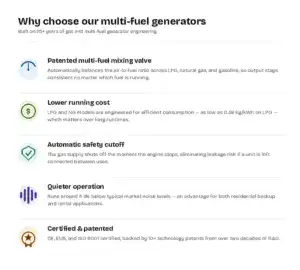
- Patented gas-mixing valve technology automatically balances the air-to-fuel ratio across LPG, natural gas, and gasoline, so output stays consistent no matter which fuel is running.
- Lower running cost per hour — our LPG and NG models are engineered for efficient consumption (as low as 0.36 kg/kWh on LPG), which matters over long runtimes.
- Built-in safety cutoff — the gas supply shuts off automatically the moment the engine stops, eliminating leakage risk if a unit is left connected between uses.
- Quieter operation — our generators run around 5 dB below typical market noise levels, which matters for both residential backup and rental applications.
- CE, EU5, and ISO 9001 certified, backed by 10+ technology patents from over two decades of R&D.