
Most sourcing conversations start with “dual-fuel generator” — units that run on gasoline and propane. But there’s a category above dual-fuel that most product catalogs never cover: the multi-fuel (tri-fuel) generator, which runs on LPG, natural gas, and petrol from a single unit. For distributors, importers, and equipment resellers supplying markets where fuel availability, pricing, or import regulations vary, a true multi-fuel generator gives end customers flexibility that a two-fuel unit simply can’t match — which translates into a broader addressable customer base for you.
In this guide, we break down what actually separates a multi-fuel generator from a basic dual-fuel model, what to verify before adding a supplier to your line card, and which specific GRETECH models fit which market segment — so you can match the right SKU to the right customer profile.
What Makes a Generator “Multi-Fuel” (Tri-Fuel vs. Dual-Fuel)
A dual-fuel generator typically switches between gasoline and propane. A multi-fuel / tri-fuel generator goes further, adding natural gas as a third option — so the same engine can pull from a home’s NG line, a portable LPG cylinder, or a petrol tank, depending on what’s on hand.
The engineering challenge is the mixing valve: it has to constantly adjust the air-intake and gas-to-air ratio so the engine gets the correct mixture no matter which fuel is loaded. On GRETECH hybrid generators, this valve is tuned so the unit outputs the same power on LPG/NG as it would on gasoline, and keeps the engine rotating steadily rather than surging — which is the main reason cheaper hybrid conversions feel underpowered or rough-running on gas.
The Best Multi-Fuel Generators
Below is a category-by-category breakdown of the GRETECH tri-fuel lineup — organized by end-use application rather than just by wattage, so you can match the right SKU to the right customer segment.
Best Overall Multi-Fuel Generator — GRETECH JLY-7000
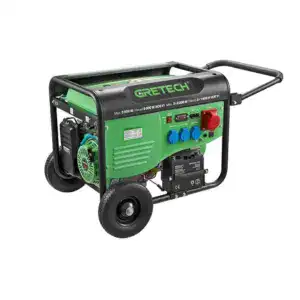
The JLY-7000 is the best all-rounder in the lineup for residential and light-commercial backup applications. It’s available in single-phase or three-phase configurations, with both recoil and electric start.
- Fuel: LPG / Natural Gas / Petrol
- LPG fuel consumption: ~0.36 kg/kWh
- Noise: 70 dB(A) at 7 meters
- Dry weight: 92.5 kg; dimensions 610×465×465 mm
- 100% copper-enameled-wire alternator for stable voltage under load
- Optional electric start with battery, digital meters, and ATS (auto transfer switch) compatibility
- CE, EU5 certified
Why it’s the pick: a rare model that’s compact enough to be portable but still carries the phase options and ATS-readiness that residential standby installations require — a strong anchor SKU for a general-purpose line card.
Best for Home Backup & Powering AC Units — GRETECH JLY-2500
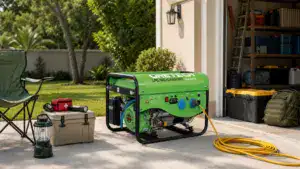
Purpose-built to handle the surge load of air conditioning units — a common failure point for smaller hybrid generators.
- Fuel: LPG / Natural Gas / Petrol
- Designed specifically for AC start-up loads
- Compatible source pressure: 2.0–6.0 kPa (0.29–0.87 PSI)
- CE and EU5 compliant
Why it’s the pick: for markets where AC backup is the primary buying driver — hot climates with frequent outages — this is the model sized and tuned for that inrush load, and a natural upsell alongside AC-heavy territories.
Best Value / Everyday Home Use — GRETECH JLY-3500
A well-rounded, lightweight option for end users that want dual fuel flexibility (LPG/Petrol) plus NG compatibility without stepping up to a bigger frame — a solid entry point for price-sensitive markets.
- Fuel: LPG / Petrol, NG-compatible
- Electric and recoil start options
- AVR (Automatic Voltage Regulator), low-oil alert, circuit breaker
- Lightweight: 46 kg, optional wheels/handle kit
- Noise: 68 dB(A)
- CE, EU5 certified
Why it’s the pick: best balance of landed cost, weight, and safety features to anchor an entry-level tier in your multi-fuel lineup.
Best High-Power Budget Pick — GRETECH JLY-6500
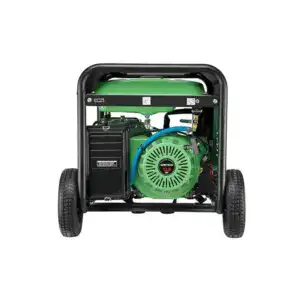
Positioned as the cost-effective step up in wattage for end users who’ve outgrown a 2500–3500W unit but don’t need three-phase output.
- Fuel: LPG / Petrol / Natural Gas
- Higher rated output for running multiple appliances simultaneously
- Same leak-proof mixing valve and easy-start recoil system as the rest of the range
Why it’s the pick: more headroom per unit cost than the JLY-7000 for customer segments that don’t need phase options or ATS compatibility — useful margin-friendly mid-tier SKU.
Best Quiet Portable Inverter — GRETECH JLY-4000I
An inverter-class multi-fuel generator, which means cleaner, more stable power — better suited to sensitive electronics — plus a 12V DC output.
- Fuel: LPG / Natural Gas / Petrol
- Inverter output (clean sine wave, safer for electronics)
- 12V accessory output
- Compact footprint for transport and storage
Why it’s the pick: the go-to option when the load includes laptops, routers, medical equipment, or other electronics that need stable power quality, not just raw wattage.
Best 2-in-1 Generator + Welder — GRETECH JLY-4000IW
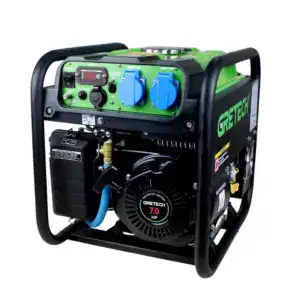
A genuinely unique SKU in this space: a multi-fuel inverter generator with built-in welding capability, at 7.0 HP.
- Fuel: LPG / Natural Gas / Petrol
- Inverter welding function built into the same unit
- Compact enough for job-site or field use
Why it’s the pick: for contractors, farms, or field-repair use cases, this eliminates carrying a separate welder and generator.
Best Three-Phase / High Power with Remote Control — GRETECH JLY-10000I
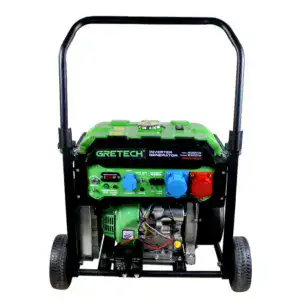
The top of the inverter range, built for larger loads and remote operation.
- Fuel: LPG / Natural Gas / Petrol
- Three-phase power output
- Remote-control start/stop
- Same corrosion-resistant, leak-proof mixing valve as the rest of the lineup
Why it’s the pick: best choice when you need serious wattage and don’t want to walk over to the unit every time you start or stop it — useful for standby/backup installations.
Best Single/Three-Phase Inverter — GRETECH JLY-8000
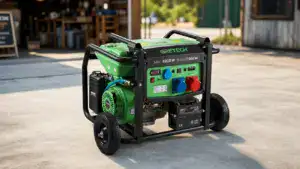
Splits the difference between the JLY-7000 and JLY-10000I — inverter-clean power with phase flexibility.
- Fuel: LPG / Natural Gas / Petrol
- Configurable single-phase or three-phase output
- Inverter power quality
Why it’s the pick: good fit for distributors who want one SKU that covers both residential (single-phase) and light commercial (three-phase) customers.
Quietest Option — GRETECH JLD-6500 (Silent Series, LPG/NG)
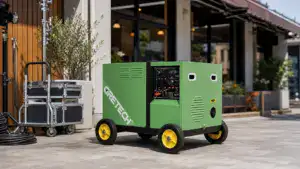
Built specifically around noise reduction — about 5 dB quieter than typical market units, which is a noticeable difference to the ear.
- Fuel: LPG / Natural Gas
- Rated power: LPG 5000W (50Hz) / 5500W (60Hz); NG 4500W (50Hz) / 4700W (60Hz)
- Max power: LPG 5500W (50Hz) / 6000W (60Hz); NG 4800W (50Hz) / 5000W (60Hz)
- Recoil and electric start
- Compact, easy to transport
Why it’s the pick: the best fit for noise-regulated markets and applications — residential zones, RV/campground use, or nighttime standby installations — where a standard hybrid generator would draw noise complaints or fail local decibel limits.
Best for Biogas / Farm Use — GRETECH JLY-2500B
A specialized variant for farms, biogas digesters, or off-grid setups producing their own gas supply.
- Fuel: Biogas, single-phase output
- Same leak-proof valve engineering as the LPG/NG models
Why it’s the pick: if you already have a biogas source, this converts it into usable backup power without a separate conversion kit.
Best High-Capacity Biogas Generator — GRETECH JLY-6500B
The larger sibling to the JLY-2500B, available in single-phase or three-phase.
- Fuel: Biogas
- Single-phase or three-phase configurations
- Suited to larger farms or facilities with higher biogas output
Why it’s the pick: scales biogas power generation up for operations that have outgrown a small single-phase unit.
What to Evaluate When Sourcing a Multi-Fuel Generator
Before comparing specific SKUs, run through this technical checklist — it’s also a useful filter for vetting any supplier claiming “tri-fuel” capability:
- Power output consistency across fuels — some hybrid generators lose 15–20% of their rated output when switched from petrol to gas. Look for a mixing valve designed to equalize output.
- Leak protection — the mixing valve should shut off gas flow automatically when the engine stops, even if someone forgets to close the regulator or switch.
- Fuel-switching pressure range — check the generator’s compatible source pressure. A wider range (e.g., 2.0–6.0 kPa / 0.29–0.87 PSI) means it will work with more regulator setups and cylinder types worldwide.
- Starting reliability — a generator that’s been sitting unused for months should still start within a few pulls, not require priming or troubleshooting.
- Noise level — especially important for residential areas; look for dB(A) ratings measured at a fixed distance (commonly 7m).
- Certifications — CE and EU5 compliance signal the unit meets recognized noise and emissions standards, which matters for import/export and resale.
- Engine/alternator build — copper-wound alternators generally outlast aluminum-wound ones and hold voltage regulation better under load.
What to Verify Before You Order
Beyond the generator itself, these are the sourcing-side questions that determine whether a supplier relationship actually works at scale:
- Certification coverage for your target market — confirm CE/EU5 is in place if you’re shipping into the EU, and ask specifically whether the same models have (or can obtain) the certifications your market requires — CSA/EPA-adjacent documentation for North America, SONCAP for Nigeria, SASO for Saudi Arabia, etc. Don’t assume one certificate covers every destination.
- MOQ and lead time by model — inverter and three-phase SKUs typically carry different MOQs and production lead times than standard recoil-start models. Get this in writing per SKU, not as a blanket figure.
- OEM/ODM and private-label options — ask whether the factory supports custom nameplates, color, packaging, and control-panel branding, and what the MOQ threshold is for private label versus stock product.
- Warranty terms and spare-parts support — clarify the warranty period, what’s covered (engine vs. alternator vs. mixing valve), and whether spare parts (carburetor kits, mixing valves, AVR units) are stocked for after-sales support in your region.
- Factory verification — request a video factory tour, third-party inspection report, or trade-assurance option if you haven’t worked with the supplier before. This matters more for hybrid/multi-fuel units than standard petrol generators, since the mixing-valve engineering is where quality varies most between manufacturers.
- Packaging and shipping specs — confirm container loading quantities (units per 20’/40′ container), packaging type (carton vs. plywood crate), and whether units ship with fuel/oil drained for compliance with carrier regulations.
Why Distributors Partner With GRETECH for Multi-Fuel Generators
A few engineering details separate a well-built multi-fuel generator from a basic aftermarket LPG conversion:
- Efficiency: the mixing valve automatically adjusts the air-intake and gas-to-air ratio, so LPG/NG output matches petrol output instead of dropping off — and the engine keeps a steady rotation for stable power delivery.
- Durability: GRETECH LPG/NG generators are rated for more than double the working life of a comparable gasoline-only unit.
- Leakage-proof by design: the mixing valve is built so that even if a gas regulator or switch is left on, gas cannot leak — a meaningful safety advantage over converted (rather than purpose-built) hybrid units.
- Cost-effective fuel use: based on consumption rates of roughly 0.36 kg/kWh for LPG and 0.35 m³/kWh for NG versus 0.58 L/kWh for petrol, running on gas is substantially cheaper per kWh than petrol — natural gas in particular can cost a fraction of petrol’s per-kWh rate depending on local pricing.
- Reliable cold/idle starts: whether the unit is brand new or hasn’t run in months, it’s designed to start within about three pulls of the recoil rope.
- Broad regulator compatibility: works across a 2.0–6.0 kPa (0.29–0.87 PSI) source pressure range, so it’s compatible with the regulator setups used in most homes and regions.
- Cleaner emissions: because the mixing valve meters gas precisely to match output demand, fuel burns more completely, reducing unburned emissions compared to poorly-tuned hybrid conversions.
Ready to Add Multi-Fuel Generators to Your Line Card?
GRETECH manufactures the full LPG/NG/petrol hybrid range in-house — including inverter, three-phase, welding-combo, and biogas variants — with OEM/ODM, private-label packaging, and CE/EU5 certification available across the lineup.
Request Wholesale Pricing & Technical Datasheets →
Download the Full Product Catalog →
For sample orders, factory verification, or country-specific certification questions, reach out directly — our team can put together a container-load quote and lead-time estimate within one business day.